Showing posts with label art of clean hard floor cleaning. Show all posts

Thursday, 2 February 2017

When to save a stone floor and when to simply cover it over....

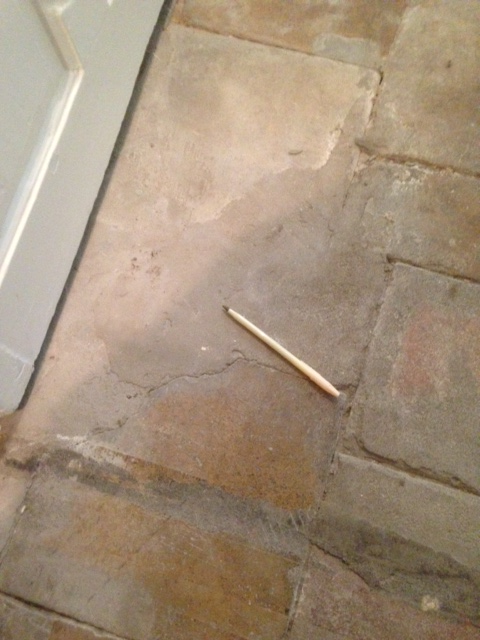
We recently had a call-out to help a client save a floor in a listed building.

It raised the question – When can a floor be saved and when is it best to rather cover it over or replace it?  Renovating a stone floor is obviously preferable, but there are limitations....

Because the floor we looked at was in a listed building and there are limitations on what can be done, all the actions the home owner wants to take has to be approved.
renovate stone floor, stone floor cleaning company, art of clean

renovate stone floor, stone floor cleaning company, art of clean


Here are some basic guidelines – please note if the home or building is listed you will require consent to carry out works:

Background:

The old carpets are lifted from the floor and a beautiful clay tile floor is exposed. Here are a few things to consider....

How old is the home? – if it was build prior to 1875 it will not have a damp proof membrane and the floor will require to be open and beatable to allow for the moisture to evaporate. In some cases homes built up to 1980 and later can have damp problems due to incorrectly installed Damp proof membranes or DPC’s.

In a case where moisture is a problem (many time the smell in the room will give this away) the following should be considered:

Lift the floor and install a good quality DPM / DPC – get a builder with experience in the field.

Or the floor can be cleaned and a impregnating sealer can be applied to allow for moisture movement through the floor. Avoid waxes and topical sealers – this will mean the floor will not have a shine finish.

Do Not place rubber matting over the floor as this can cause moisture to get trapped under the rubber and it can turn into a very smelly room – remember that carpet underlays will in most cases act as a barrier and this can cause the same problem. It is sometimes better to do what is required to fix the problem than to simply cover it over.

If you choose to lift the floor and install a DPM – you can opt to keep the original floor tiles and re-lay then after the DPM is installed – ensure your builder is aware of this so he lift the tiles with care.

If you would like some more information and advice about our professional wood and stone floor services please contact our friendly team on 01223 863632 or visit www.artofclean.co.uk.


Art of Clean
 is a specialist cleaning firm in: 


Working for domestic or commercial clients throughout Cambridgeshire, Essex, Suffolk and Hertfordshire.

For more information on our services contact our friendly team on 01223 863632 or email us at info@artofclean.co.uk


Monday, 30 November 2015

3 Mistakes to avoid with choosing and cleaning hard floor surfaces

Many home owners learn about their mistakes choosing the wrong floor only after the floor is installed and by then it is too late and in many cases too costly to replace.

This guide is designed to help you choose the right tile or stone floor for your home.

Mistake Number 1

Choose a tile that is not fit for purpose

This mistake is many times made as they beauty of the tile or stone is the main or only contributing factor for choosing this floor covering.

Also consider the following:
What type of soiling will the surface be exposed to. In a Kitchen you will find greasy stains while in bathrooms it will be soap residues and lime scale. Consider the cleaners that will be required to clean these residues off should not harm the tiles. For example – Using limestone in a shower room will lead to a build-up of lime scale on the tiles and the only way to safely remove it is to grind the stone back. If you should choose a porcelain tile this can be cleaned with an acetic cleaner that is safe on the time (an acetic leaner is not safe to use on Limestone)

Mistake Number 2
Low Maintenance must not be confused for No maintenance

Tile and stone surfaces require regular deep cleaning. Ensure you use gentle neutral PH cleaning solutions. Be very careful to use harsh cleaners as this can break sealer down early and cause the floor to re-oil very fast. Do not over wrongly dilute your cleaning products. Always use cleaners that are intended for your floor. A regular damp mop followed by a through deep clean wi;l keep your floor looking great for a long time.

Mistake Number 3

Scrubbing the floor clean yourself

You see I have looked at many floors over the years and I have seen and heard of clients that spend days on end scrubbing and cleaning their floors only to find the floors re-soil very fast afterwards. Why does this happen. Well the thing is that most floors are sealed or mechanically closed up. Once the floor start looking really dirty people choose to revert to deep scrubbing and cleaning. The cleaners that are employed in most cases are way too harsh for the floor and strip away the layer of protection on the floor. If you do choose to clean your own floor do a small test patch and leave it a few days after the clean. Once happy with the result proceed to clean your whole floor in that way.

Always remember to apply a fresh coating of sealer.

If you need more information, give us a call on 01223 863 632.


Art of Clean is a specialist cleaning firm in: 


Working for domestic or commercial clients throughout Cambridgeshire, Essex, Suffolk and Hertfordshire.

For more information on our services contact our friendly team on 01223 863632 or email us at info@artofclean.co.uk


Monday, 23 November 2015

Slate cleaning and sealing in Cambridge with Art of Clean


Take a wander down your road, take a left, then a right, twirl around and jump up and down. OK, the jumping up and down is excessive, but I guarantee you, that within a few seconds of stepping from your home, you’ve seen at least slate at least 50 times.

Most houses in Britain are over 80 years old. And while their facades may have weathered and their roofs needed replacing, it’s always slate that the roofers prefer. The thing is, it’s not only roofs that sporty slate finishing, many homes throughout the British Isles make use of Slate as a flooring option.

Slate is particularly suitable as a roofing material as it has an extremely low water absorption, making the material waterproof and if that can be said of a material used above the house, why not below it too. A water repellent floor is what we all strive for, but if it happens to look great too, even better.

Flooring options are so varied that it is all but impossible to specialise in just one. As a result, Art of Clean realised a long time ago that if they were to become the premier floor cleaning service in Cambridgeshire they would need to branch out. As such, we can now say, without a shadow of a doubt and without blowing our own whistle to loudly, Art of Clean are experts in cleaning ALL kinds of flooring.

Be it slate tiling or pine boards, terracotta slabs or marble sheets; Art of Clean can bring that dated piece of flooring back from the brink and renew it to the point it will resemble a brand new installation.

If you take a look at these examples, you’ll see why we promise you such a high level of perfection in our work. Our website lays claim to many things, but none without good reason and whether you believe what you read or need a demonstration, Art of Clean can provide.

Slate is a funny material. Generally grey in colour, Slate is a composed of either volcanic ash or clay, but it can come in other shades. If you’re willing to pop over the border into Wales (or import, easier to import), you can find Slate in shades ranging from grey (pale-dark) and even purple, cyan or green.

Now, I am not an interior designer, but I would imagine, a floor sporting a combination of these colours might add something interesting and remarkable to a property.

So, if you’re in need of a little rejuvenation, why not call Art of Clean.

More pictures on slate cleaning in Cambridge.


Art of Clean
 is a specialist cleaning firm in: 


Working for domestic or commercial clients throughout Cambridgeshire, Essex, Suffolk and Hertfordshire.

For more information on our services contact our friendly team on 01223 863632 or email us at info@artofclean.co.uk

Wednesday, 4 November 2015

Brick flooring in London Town

Last week we sent the lads south of the Watford gap to have a look at a few bricks laying around on a client's floor. Turns out, the home was being renovated by a rather successful architect and rather than employ the local boys to clean the floor, he called the professionals...from Cambridge.

So, they hopped in the van and headed down the M11.

Now, I wasn't there and the lads'll deny it if I ask, so I have to assume they listened to ABBA and Dancing Queen most of the way and once they arrived, gruffed it up and put on their best Landana accents, so as best to fit in.

This is what they found.

http://www.artofclean.co.uk/

On the surface of it and to an untrained eye, you might think, OK, it's not so bad, all it really needs is a good mopping and a decent scrubbing....but you'd be wrong.

This delightful image below is in actuality, just a fraction of the dirt, old sealer and general rubbish that the boys found themselves scouring from the brickwork.

http://www.artofclean.co.uk/

NOTE: Sealer is NOT easy to remove!

After a darn good scrubbing (and I'm talking, without exaggeration - 15 washes), soaking, agitating, aggravating (generally annoying the floor) with rotary steamers and with six fans going, the brick floor began to dry and take on a completely new lease on life.

http://www.artofclean.co.uk/

Praise from our client: "I've never seen the floor look so good, even after it was first lain and sealed".

http://www.artofclean.co.uk/

http://www.artofclean.co.uk/

As ever and case in point. If you want the job done fine, call your buddy Frank, if you want the job done right, call the professionals.


Art of Clean
 is a specialist cleaning firm in: 


Working for domestic or commercial clients throughout Cambridgeshire, Essex, Suffolk and Hertfordshire.


For more information on our services contact our friendly team on 01223 863632 or email us at info@artofclean.co.uk

Thursday, 12 March 2015

Removing paint from stone and tile floors

The picture below shows a stone floor that was painted long time ago and with the time, the paint has been removed. It is very difficult to remove all the paint from the stone. In Cambridgeshire, we also find bricks painted in red as this was fashion several years ago.


For the removal of paint, oil and waxes on old tiles like this we use a specialist method where the treatment starts the day before the actual cleaning start. We call it "Blanket cleaning."

This allows our clients to still have access to the treated areas till the next day when we start the cleaning as we will use a very thick plastic sheet covering the floor that is coverd with our specialist cleaning solutions.

Art of Clean is a specialist cleaning firm in: 


Working for domestic or commercial clients throughout Cambridgeshire, Essex, Suffolk and Hertfordshire.

For more information on our services contact our friendly team on 01223 863632 or email us at info@artofclean.co.uk


Friday, 23 January 2015

The importance of choosing a company that invest in regular equipment upgrades


We live in a world of evolution where things change really fast. Every day we hear of new developments and discoveries in the world.

We also see regular changes in the cleaning and restoration industry.

Here is the thing – Every few years you will replace your mobile phone or car. You might have noticed that those items you buy to replace the old items do so much more – offering you so much more benefits.

Why would you be happy to accept or in most cases EXPECT upgrades to everyday items but still be happy to except your cleaning and floor restoration firm do NOT invest in product or equipment upgrades?

Why would companies make a profit from the work you give them and not use some of the profit to re-invest and in turn serve you better?

Maybe it is time to invite someone else in to quote for the cleaning of your flooring and furnishings or the sanding and sealing of your wood floor.

Here are a few investments we recently made at Art of Clean to serve our clients better and help our amazing technical team have pleasure working for you:
New SX7 stone and tile cleaner

This item helps clean hard floor surfaces by injecting water at higher temperature onto the floor area and then safely extracting it off the floor.


Here are the benefits to you:
This new tool clean well into small corners (notice the nose on the tool) using a jet of water on the nose of the tool. It is also way more controllable and gets more dirt off the floor.


Art of Clean is a specialist cleaning firm in: 


Working for domestic or commercial clients throughout Cambridgeshire, Essex, Suffolk and Hertfordshire.

For more information on our services contact our friendly team on 01223 863632 or email us at info@artofclean.co.uk

Tuesday, 7 October 2014

Friday, 26 September 2014

Oak wood floor cleaning at Aunties Teashop Cambridge

Aunties Teashop is situated in Cambridge City center, over the road from the infamous King’s College.  It has a quaint olde-world style and they home-bake and freshly prepare classic Teashop delights.


They have a lovely oak floor that gets very greasy and dirty from the heavy foot traffic that passes through daily.  Art of Clean tend to the floor every six months to ensure it is always looking at its best.  The work gets done out of hours so that it is ready for use the next day.

To start with the floor gets a through low moisture cleaning, the technicians will give it a rotary scrub with Pullmann Neutral Cleaner before being dried off completely.

Once dry, a coat of Pullmann Magic Oil is bladed on and buffed in.

This process really benefit the client as the floor does not need a lengthy sanding down, so the whole process can be completed much quicker, it will last much longer also.  The client should apply a fresh coat of Pallmann Magic Oil care once per month after the floor had a very good mop and is dry.

So next time you’re in Aunties Teashop don’t forget to take a look at the lovely floor!

For more information about our Wood Floor services, or our other Floor and Soft Furnishings services. please contact the team on 01223 863632 or at www.artofclean.co.uk to find out more.

Monday, 12 May 2014

How to grout tiles- What grout to choose when laying my new tiled floor.

how to grout linesNow that project you have put off so many months has finally come to the point where the end is just about in sight. The new tiles will go down soon and then the new kitchen will be fitted. You cannot wait – You imagine yourself cooking away in your new kitchen, enjoying every minute of it… Enough day dreaming – Back to reality.

 Your task today is to go get the glue and grout for the tiled floor. When in the tile shop you get confronted with rows and rows of different tile adhesives and grout – What do you choose?

Sanded – Non Sanded – Flexible - Non Fixable – Epoxy ?

Here are some pointers to set you on the right road: My advice comes as a tile floor cleaner and there might be people that feel different about this. My advice is aimed at helping you get the most from your investment.

Sanded Grout
Pro’s
Sanded grout contains – Like the name say – Sand. It is mostly advised for wider grout joints as it do not shrink as much and is claimed to be stronger.

Con’s
Sanded grout can scratch tiles (especially polished stone tiles) when the tiled floor gets grouted – Be careful. Sandy grout can be a sponge for dirt – If you want your tiled floor to look and stay clean – lay your tiles closer together (to prevent shrinkage of the groutline) and use non sanded grout

Non Sanded Grout
Pro’s
Smooth surface once installed – stay cleaner and if it gets dirty it cleans real well. Do not scratch tiles hen applied

Con’s
Shrink when applied to wise grout joints.

Epoxy Grout
Pro’s
Very resistant and hard wearing grout. In my opinion the best option for most floors. Mostly a smooth paste that will not scratch tiles when applied

Con’s
2 part product that do not use water. Goes off fast so plan your job v=carefully otherwise it will be hard before you are finished. In some cases might not be as environmentally friendly (Chemical)

Flexible Grout
Pro’s
Great in preventing cracked joints (if severe movement in tiles the grout can still crack) As it contains latex and other plastic it can be greatly dirt resistant so stays cleaner and cleans up well.

Con’s
Careful with this grout – if not cleaned off well from the tiles it can be really hard to remove the grout haze once dry.

Non Flexible Grout
Pro’s
Strong and hard – Good for solid floors that do not allow any movement

Con’s
Is not good on ply floors (wood floors) or any unstable wall or floor – Can crack easily.

My last piece of advice when learning “how to grout a tiled floor” is:
Always use the right tile adhesive – Lighter tiles – lighter Tile adhesive – Darker tiles – Darker Tile adhesive.

Friday, 28 March 2014

Sandstone floor cleaning and sealing


We had great pleasure to help a great client of ours with a challenge on her sandstone floor. The sandstone was laid 3 years ago and did not look very dirty. She started to notice the sandstone grabbed on to dirt more and more. This was an indication that the sealer started to wear away. The sealer that was applied appeared to be an impregnator.

We started by rinsing the stone floor with clean water and vacuumed it up. (Our Van mounted or also known as a truck mount came in very handy here) We then applied a Wax and Residue remover to break down the greasy soils - As it is in a kitchen there will always be oil present. They also have a lovely black Labrador and this can add to dirt build up.

Once applied the cleaning solution is agitated into the floor with a rotary machine and hand brushes for the corners. Time on the floor helps the cleaner work and do its magic. 20 - 30 minutes later the stone floor gets a final scrub before the slurry (dirty water) gets rinsed off at high pressure.

The floor was cleaned several times to get the desired result.

Sandstone can be very porous so it was left over night to dry off.

Sandstone is a textured stone thus dirt grabbing on to it really easy and it is famous for shredding mops easily. To reduce this sandstone floor was sealed with a good quality topical sealer. This helped to enhance the colour of the stone and gave it a silky smooth finish.

Our client was so happy she asked us to clean the sandstone in the rest of the house as well.


Monday, 2 May 2011

Removing paint from stone and Tile floors

The picture below shows a stone floor that was painted long time ago and with the time, the paint has been removed. It is very difficult to remove all the paint from the stone. In Cambridgeshire, we also find bricks painted in red as this was fashion several years ago. 

For the removal of paint, oil and waxes on old tiles like this we use a specialist method where the treatment starts the day before the actual cleaning start. We call it Blanket cleaning.

This allows our clients to still have access to the treated areas till the next day when we start the cleaning as we will use a very thick plastic sheet covering the floor that is coverd with our specialist cleaning solutions... 

here is a example of Pierre covering a floor...