Showing posts with label terracotta tiles. Show all posts

Friday, 9 January 2015

How to clean a Terracotta floor?


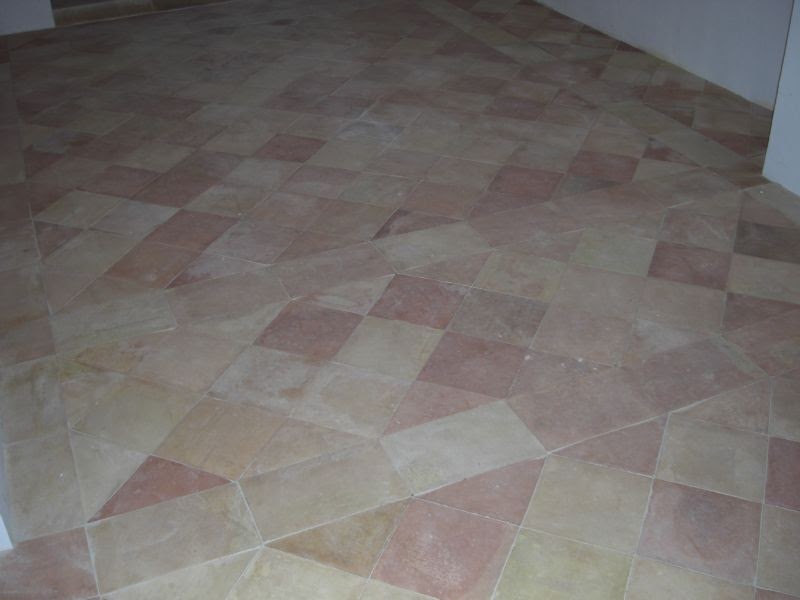
You have just had your Terracotta floor professionally cleaned and sealed!

http://www.artofclean.co.uk/terracotta-tilebrickquarry-tile-cleaning/


Now how do you keep this terracotta floor clean and looking as good as it does now?  Let’s face it – It will get dirty!

Your cleaning regime is the only weapon you have.  Here are a few tips on keeping your floor clean:


Routine cleaning


It is crucial your daily cleaning of your floor is done correctly.
You will need: - (Find these products at Art of Cleans online store - Click here)

  • A 2 compartment mob bucket 
  • Good quality mop (clean) 
  • Cleaning solution (mild Terracotta floor detergent) – Try this 
  • Clean water.

http://www.artofclean.co.uk/terracotta-tilebrickquarry-tile-cleaning/Fill one side of your mop bucket (the side you will wring your mop in) with clean water.
Make your cleaning solution mix as described on the bottle in the other mop bucket compartment.
Wet your mop in the clean water and wring it out. Dip the tips – (3 – 6 inches) into the cleaning
solution and wring your mop. 
Now start mopping your floor. After cleaning about 3 – 5 sq meters, rinse the mop in the clean water side of the bucket and dip the tips of the mop (3 – 6 inches) into the
cleaning solution side – wring out and repeat as above.
Let the terracotta floor dry and return to normal use.

***If it is a large area replace the rinse water when dirty.***

You will get into a rhythm to get the ratio of cleaning water and rinse solution just right so when the rinse water is dirty your cleaning solution will be finished in the bucket.

How to clean Rough Surface Terracotta floors (Upside down Terracotta)


Some Terracotta tiles can have a rough surface to them that allows for great character and has a great non slip finish. These floors sadly love to grab on to dirt. Your standard mop will be ripped to pieces on these floors. Upside Down Terracotta (Yes that’s correct – The tiles gets laid upside down for a unique effect) Sandstone, York stone, Bricks and some slate floors.

The best way to clean these floors is by pouring some cleaning solution mix on the floor and then use
a medium stiffness broom/Brush to agitate it well. Use smaller brushes to reach into corners. Once it has been scrubbed well, use a wet vacuum to pick up the dirty slurry from the floor. Pour clean water on the floor to rinse and vacuum up with a wet vacuum. Do not to let moisture seep in under furniture as it can case swelling and damage to skirting boards kickboards and others wooden items.


Why do we advise the above method?


Simple – if you mop a floor with a single compartment mop bucket you will collect the dirt on the floor
and contaminate your cleaning solution with this. You will then keep spreading this onto the floor
every time you rinse your mop in the solution.
For more information call Art of Clean on 01223 863632 or visit www.artofclean.co.uk or to purchase
cleaning tools and products visit www.artofcleanonline.co.uk


Art of Clean are specialists in: 

Rug Cleaning,


Working for domestic or commercial clients throughout Cambridgeshire, Essex, Suffolk and Hertfordshire.


Monday, 15 December 2014

Steer clear of cheap Terracotta floor tiles


Terracotta is a traditional product created from the the elements of nature - Earth, Fire and Water.  Terracotta has been used for millennia, most famously to create the Terracotta Army - the burial protectors of the first Emperor of China back around 210-209 BCE.

Quality terracotta floors can last more than a lifetime, but not all terracotta tiles are made equally so be sure to do your homework before you make a commit to making the investment.

What to look for?


  • Price - although price cannot always be an indicator of quality you can be assured that businesses that have an "Amazingly Low Price" will also have amazingly low quality.  These tiles will likely be bulked out with other substances to keep production costs low. Grit and sawdust are most commonly used bulking products, these will greatly reduce the tiles durability and will develop cracks, and chip easily when objects are dropped on them.
  • Weight - Cheaper terracotta tiles are made using liquid clay that is full of small bubbles.  Handmade and high quality terracotta tiles are made using dense lumps of clay to fill the mould, the density of these will give it much more weight.  Bubbles in the tiles will create a honeycombe effect in the tile makes it much weaker.
  •  Handmade - Handmade terracotta tiles will be traditionally created using good quality, pure clay.  You can tell apart handmade tiles by taking a closer look at them - straight uniform edges and smooth glass like surface indicate mass production.


Find handmade quality Terracotta tiles at Norfolk Pamments

Or find quality Terracotta tiles at Fired Earth, found locally on Christ's Lane, Cambridge.


Once you have your beautiful floor remember - regular maintenance and annual cleaning and protection are important to preserve the longevity of your floor.

Art of Clean are specialists in: 


Working for domestic or commercial clients throughout Cambridgeshire, Essex, Suffolk and Hertfordshire.

For more information about our services please contact our friendly team on 01223 863632 or visit www.artofclean.co.uk.


Friday, 17 October 2014

Norfolk Pamments - Hand made terracotta tile makers

We visited Norfolk Pamments to see how they made their Terracotta tiles.  Knowing about the creation process helps us understand our job even better.


See our short video to see how they are made!


Here's what Norfolk Pamments say about their business:

http://www.terracottafloorcleaning.co.uk/Norfolk Pamments are traditional terracotta floor tiles, hand made from regional clays. Pamment (or pammet) is a local word, though becoming increasingly known outside East Anglia. Widely used for barn, house and cottage renovations and in conservatories and patios, pamments are also to be found in churches, pubs and sites of historic interest. They are suitable for use outdoors as well as indoors and are ideal with underfloor heating, having excellent thermal retention qualities. They have been specified by many of the bodies involved in protecting England's heritage, including County Councils, English Heritage and the National Trust. Norwich Cathedral, Bury St Edmunds Cathedral, Magdalene College in Cambridge, the registry office in Thetford and Binham Priory are among the many places where our pamments are found. There is also a growing trade in "exports" to other parts of England. Norfolk Pamments has been "Highly Commended" by the Norfolk branch of the Campaign for the Protection of Rural England in recognition of its contribution to the fabric of the county's buildings

The different clays used help to create the full range of traditional colours from red, to pink to buff/white. Regional clays include the Gault clay used in the manufacture of the 'white' brick. Most pamments are a mixture of clays, and being hand made each has an individual character and colour. All traditional sizes are made, including floor bricks and 12"x12"s. Due to the nature of the clays, the sizes quoted are nominal, and the finished sizes may vary a little - if you need an exact size, please tell us. Although we carry stock, pamments are often made specifically for a client, and this enables you to have a choice of colours and size.


Sourced from: http://www.pamments.co.uk

We are a professional cleaning company who specialise in Carpet, Rug, Hardwood floor, Stone floor, Upholstery and Leather cleaning for domestic an commercial clients.

 For more information about our services contact the team on 01223 863632 or at www.artofclean.co.uk to find out more.